This time, the difference is not that Trump is complaining in advance about an election that he fears he’s going to lose; it’s that his threats to the integrity of the upcoming midterm elections have come earlier, louder, and with greater specificity and purpose than ever before. Time and again, starting almost from the moment he returned to the White House, in January last year, he has made it clear that he will not accept the outcome of almost any race in which a Democrat is the winner—even when they are runaway victors. (He recently accused Abigail Spanberger of cheating to win the Virginia governor’s race in November, although she beat her Republican opponent by nearly fifteen points.) On Wednesday, in an interview with NBC News, Trump gave what is now his standard answer: I will accept the results of the election only if I think that it is fair. The point seems to be that, for Trump, any election won by a Democrat is, by definition, unfair, fake, rigged. Given how often Trump has repeated this view, it seems reasonable to stipulate that, the more the polls show the President and his Republican Party bleeding support ahead of the midterms, the more he will preëmptively question the very possibility that the elections could produce an honest and reliable result.
If only this were just a matter of Trump talking. A list of actions that he’s already taken since returning to the White House includes issuing an executive order, later struck down by a federal court, to make sweeping changes to the electoral process, such as requiring proof of citizenship in order to vote; hiring election deniers into key positions across the federal government; ordering investigations into the nonexistent fraud that he claims robbed him of victory in 2020; and pressuring state and local officials to change election laws to get rid of mail-in balloting and redraw congressional-district boundaries in order to advantage Republican candidates. In one remarkable example, which recently became public, on the day that Alex Pretti was killed by federal agents in Minneapolis, the Attorney General, Pam Bondi, suggested in a letter to Minnesota’s governor, Tim Walz, that the thousands of heavily armed immigration officers currently terrorizing the city’s residents would only withdraw if, among other things, the state agreed to turn over its voter rolls to the Justice Department. What, exactly, does she want them for?
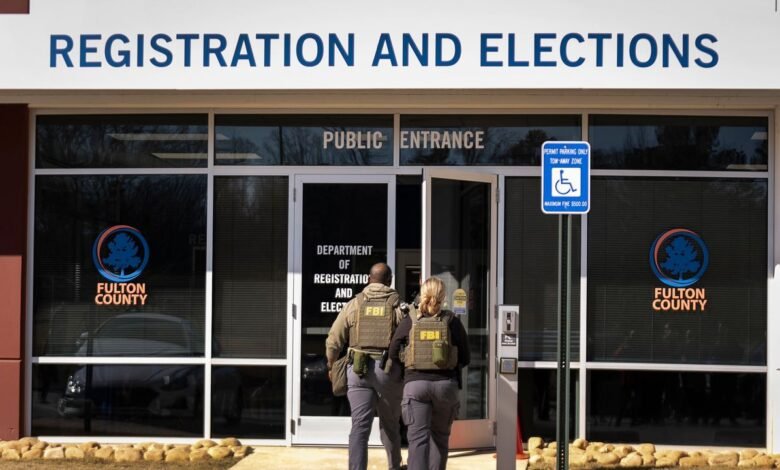
And then there is what’s happening in Georgia, where, this past week, F.B.I. agents accompanied by Tulsi Gabbard, Trump’s director of National Intelligence, raided the Fulton County election headquarters to seize evidence related to Trump’s 2020 defeat in the state. In the days since, the Administration has offered a shifting array of explanations for why an official whose job it is to oversee our nation’s response to international threats should be involved in a domestic political matter—the brightest of red lines in America since the scandalous revelations in the nineteen-seventies about the government spying on its own citizens. Trump said on Thursday that Bondi had asked Gabbard to be in Georgia, though just a day earlier he claimed that he did not know she had been there, while Gabbard herself wrote in a letter to Congress that “the president himself” had directed her to be present. None of which, of course, answers the question of what it is that the Administration is actually doing in investigating a crime which, let’s be clear here, did not occur.
The Georgia case, whatever it leads to, underscores the extent to which Trump remains obsessed with rewriting history to expunge his 2020 loss. “They rigged the second election. I had to win it. I needed it for my own ego,” he told the National Prayer Breakfast on Thursday. “I would’ve had a bad ego for the rest of my life.” The level of obsession indicated by these comments ought to be proof (as if any were needed) that he is not prepared to accept future losses, either.
In that sense, one of the most telling of the President’s recent comments was an aside he raised in an interview with the Times a few weeks back: Trump, looking ahead to this fall, told the reporters—on the record—that he had made a mistake in not ordering the National Guard to seize voting machines in swing states that he ended up losing in 2020. “Well, I should have,” he said.